Lead management for affiliate marketing
Originally published on jonatascastro.com. English edition translated and revised 01 Oct 2026. Historical examples are identified in the text.
Not everyone who discovers an offer is ready to buy it. Some people are still trying to understand a problem; others are comparing options. Sending the same sales message to all of them can miss what they need.
Lead management is the process of organizing those relationships: understanding why someone showed interest, providing useful information, and recognizing when an offer becomes relevant.
That was the focus of my original article about affiliate marketing. This revised edition keeps its structure while placing more emphasis on relevance and the subscriber's choice.
The sales funnel and inbound marketing
A sales funnel is a simplified way to describe stages in a buying decision:
- Awareness: the person is discovering a problem or topic and begins reading your content.
- Consideration: they explore possible solutions and may subscribe or request more information.
- Decision: they compare specific offers and decide whether to buy.
People do not always move through those stages in a straight line. The model is useful when it helps you choose appropriate content; it is less useful when it becomes an excuse to pressure every contact toward a sale.

Original image credit: Marketing de Conteúdo.
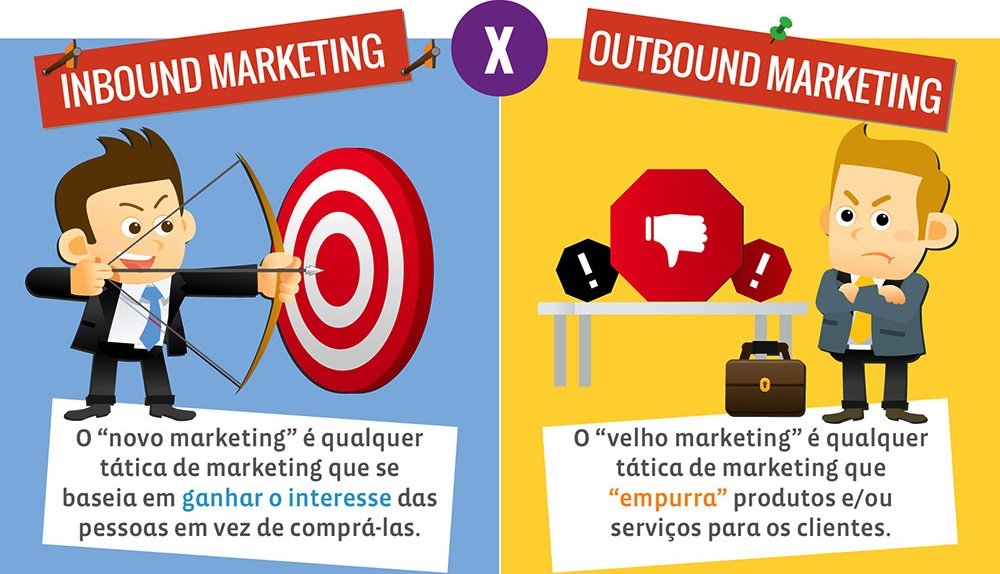
Inbound marketing brings people toward your work through material they choose to read or use: articles, search results, tutorials, and other resources. The relationship develops because the content answers a real question.
Original image credit: Viver de Blog.
Generate interest before collecting contacts
The original article described four ways to invite a subscription:
- Landing pages: offer a useful guide, webinar, or other resource with a clear description of what the visitor will receive.
- Helpful content: answer a relevant question and point readers toward an appropriate next step.
- Pop-ups: present an invitation carefully, without making the page difficult to use.
- Subscription forms: give readers a visible way to opt in while browsing the site.
Ask only for information you need, and distinguish access to a resource from permission to receive further marketing. Make the invitation understandable before the person submits the form.
Nurture the relationship
A nurturing sequence is a series of messages that helps someone learn more about a topic. It might move from a basic explanation to an example, then to a comparison of solutions.
Use material from your blog, guides, or other resources. Each message should have a reason to exist beyond moving the recipient closer to a purchase.

Different interests may need different sequences. Someone who downloaded a piano guide should not automatically enter a campaign about an unrelated business product.
You can also respond to engagement: a person who asks a specific question may benefit from a direct answer, while someone who does not engage may prefer fewer messages. An unopened email alone is not reliable proof of disinterest.
Qualify leads with relevant information
Qualification asks whether an offer fits the person's situation and whether they are interested in it.
Useful information might include the problem they want to solve, the kind of work they do, or the features they ask about. Collect it transparently and avoid making assumptions from irrelevant personal characteristics.
The original article used a broad age-and-career profile as an example. A better fit assessment starts with the needs your product actually addresses.
Use lead scoring carefully
Lead scoring assigns points to selected signals, such as a requested demonstration or a response to a specific offer. It can help organize follow-up when a list becomes too large to manage manually.
A score is a prioritization aid, not proof that someone wants to buy. Choose signals you can explain, review whether they predict useful conversations, and respect unsubscribe requests regardless of the score.
Automate the repetitive work
An automation platform can help manage forms, segment a list, send a sequence, and keep records consistent. It becomes particularly helpful when several sources create contacts in the same system.

Check the results, rather than assuming the workflow is correct because it ran. Look at form completion, meaningful clicks, replies, complaints, and conversions that you can attribute responsibly. Open rates alone can be misleading.
The goal is a better relationship: useful information while someone is learning, a relevant offer when they request it, and a clear way to leave when the material no longer helps.
For an introduction to connecting separate tools, see the automation-services article.
The original Portuguese post credited text adapted from the Leadlovers blog and included an affiliate promotion. This edition is a rewritten explanation of the same topic; the original attribution is retained.