Starting an email list from zero
Originally published on jonatascastro.com. English edition translated and revised 01 Oct 2026. Historical examples are identified in the text.
Why build an email list when you already have a blog or social-media account?
A list gives interested readers a way to keep hearing from you directly. You can share new articles, continue a conversation, and introduce a product when it is relevant to the subscriber.
In the original post, I introduced a short ebook about starting an email list from zero. Its goals were to help readers promote their blog posts, communicate with their audience, and build a more consistent relationship over time.
A practical starting point
The useful foundation is simple: give people a clear reason to subscribe, explain what they will receive, and make leaving the list easy.
Before building elaborate automations, answer these questions:
- Who is the newsletter for?
- What useful material will they receive?
- How often will it arrive?
- Where can they subscribe and unsubscribe?
- How will you tell whether the messages are useful?
A small list of interested readers is a better starting point than a large collection of addresses from people who never asked to hear from you.
What changed in this edition
The 2016 article cited email-usage and return-on-investment statistics from Viver de Blog. Those figures were part of the original promotion; their underlying studies are not available here, so I have not repeated them as current evidence or promised a particular financial return.
The durable point is the relationship: send something useful, set expectations, and evaluate replies and meaningful engagement rather than assuming that a growing address count guarantees sales.
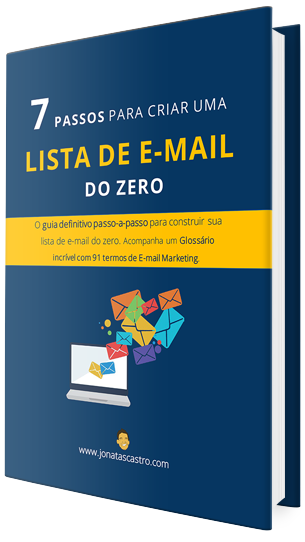
Download status
The old download page is unavailable, and the original PDF has not yet been recovered. This is the introduction to the ebook, rather than a reconstruction of its seven chapters.
For a related article that is available in full, see seven ways to reduce the chance of legitimate emails being treated as spam.